What is a Sale Deed? Types, Key Clauses, and How to Draft

Buying a home or plot is exciting-until paperwork enters the chat. The document that truly seals your ownership is the sale deed. In this guide we break down the sale deed meaning, go through its types and must-have elements, and show you exactly when and how to use a sale deed for property transactions in Tamil Nadu.
If you are looking for apartments in Chennai or plots in Chennai, knowing the sale deed document will protect your investment and facilitate smooth registration with StepsStone Promoters Pvt Ltd and other developers.
What Is a Sale Deed?
A Sale deed is the last registered legal document which transfers the ownership of immovable property from the seller (vendor) to the buyer (vendee). To clarify:
- Sale agreement = agreement to buy
- Sale deed = Transfer of title and possession in law
In Tamil Nadu this agreement is popularly known as Virpanai Pathiram and it should be executed on non-judicial stamp paper and registered at the Sub-Registrar Office (SRO) having jurisdiction over the property. A sale deed document is not admissible as evidence of title unless it is registered.
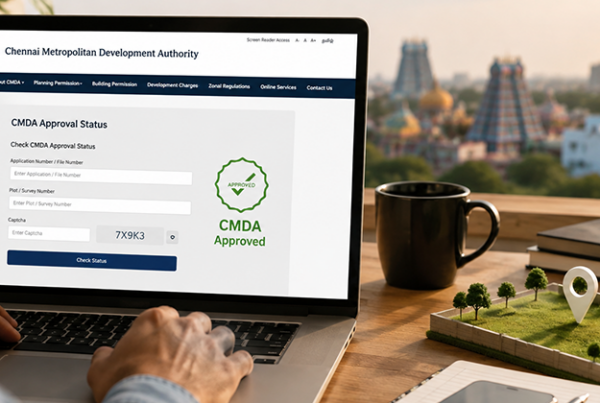
Must Read: CMDA Approval: Meaning, Importance and How to Check Status Online
Types of Sale Deeds You’ll Encounter
While the form and content of the sale deed will vary with the type of asset and the structure of the transaction, the basic objective is the transfer of ownership. Some common types are:
- Chennai Property Sale Deed document for Residential Flat
- Plots in Chennai-Standalone Sites-Plotted Development Land Sale Deed
- Resale Property Sale Deed with Previous Title History Registered
- E- stamp duty payment & appointment booking through TNREGINET – Online Sale Deed workflows (Document drafting still mostly done by Advocate/Document writer)
Key Components of a Sale Deed Document
A robust sale deed document leaves no room for ambiguity. Here’s what a standard sale deed form in Tamil Nadu includes:
| Component | What It Covers |
| Parties Involved | Full names, addresses, PAN, Aadhaar of buyer, seller, and witnesses |
| Property Details | Survey number, extent, boundaries; flat/unit number for apartments; taluk, village, zone |
| Sale Consideration | Total price, advance paid, balance payment mode (cheque/RTGS), TDS if applicable |
| Title & Encumbrance | Declaration of clear title; property free from loans/liens; reference to EC |
| Possession Clause | Date and manner of handing over physical possession |
| Indemnity Clause | Seller’s promise to compensate for future title disputes or defects |
| Registration Details | Stamp duty paid, registration number, date, SRO jurisdiction |
Must Read: Land Buying Procedure in Chennai: Full Guide & Checklist
Must Have Supporting Documents
Pre-registration of property sale deed document, keep these ready:
- Original Sale Deed/Deed (Gift/Release/Settlement) (if any) in Seller’s Name
- Chain of title (last 30 years) parent documents
- Encumbrance Certificate (EC).
- Transfer application for Land Patta Patta/Chitta/FMB sketch for plots
- Identity & Address Proof (Aadhaar, PAN, Passport, Driving License)
- Passport size photographs of all parties and 2 witnesses
- PAN cards (mandatory if transaction exceeds Rs 10 lakh)
- TDS on sale of property u/s 194-IA if value > ₹50 Lakh (1% of sale consideration)
- Power of Attorney for any person acting on behalf of another
Under Tamil Nadu’s 2025 amendment (Section 34-C), the registering officer will not register unless the seller produces the original document through which they acquired the property.
Must Read: Chennai Property Tax: How to Pay Online in Minutes
Sale Deed vs Sale Agreement: Don’t Mix Them Up
Many buyers confuse these two. Here’s the crisp difference:
- Sale Agreement: A preliminary contract outlining terms, payment schedule, and possession timeline. It creates an obligation to sell/buy but does not transfer title.
- Sale Deed: The conclusive instrument that transfers ownership and is registered. It is the document you rely on for mutation, loans, and resale.
Think of the agreement as the “roadmap” and the registered sale deed as the “destination.”
When to Use a Sale Deed for Property
Use a sale deed for property when:
- You are purchasing a new or resale apartment, plot, villa, or commercial unit
- The seller is ready to transfer title after full or agreed payment
- You need bank loan disbursement linked to registration
- You want legally enforceable proof of ownership for mutation, tax records, and future resale
For under-construction projects, developers often execute the sale deed at project completion or as per milestone-linked schedules in the agreement. For ready-to-move apartments in Chennai, registration typically follows soon after agreement execution and payment closure.
Must Read: Best Time to Buy a House in India: Month-by-Month Analysis
How to Register a Sale Deed in Tamil Nadu
Registration turns your sale deed document into a registered sale deed with evidentiary value. Follow this practical flow:
Draft Deed
- You may have a registered document writer/advocate to write the deed of sale on appropriate stamp paper with all important components and schedules.
Pay Stamp Duty And Book Slot
- Calculate and pay stamp duty (commonly 7% in Tamil Nadu for property) and registration charges (around 1%) via TNREGINET or empanelled banks. Book your SRO appointment.
Carry Originals And Id Proofs
- Both buyer and seller must appear with originals: prior deed, EC, patta, tax receipts, PAN/Aadhaar, photos, and payment challans. Two witnesses with ID are mandatory.
Verification And Biometrics
- The SRO verifies documents, captures biometrics (Aadhaar-based), and may scan/upload supporting papers. Tamil Nadu is moving toward “Anywhere Registration” with digital uploads and biometric verification.
Execution And Registration Number
- Parties and witnesses sign before the registrar. Upon acceptance, the registered sale deed is assigned a document number and date. Collect the certified copy.
Post Registration Formalities
- Apply for patta mutation, update property tax records, and inform the society/association for apartment entries. Keep your property sale deed document safe—it’s your primary title proof.
Must Read: Legal Documents Required for Purchase of Plot in Chennai
Online Sale Deed: What’s Possible in Tamil Nadu?
“Online sale deed” usually refers to digital facilitation, not a fully virtual deed. In Tamil Nadu:
- Payment of stamp duty and registration fees can be done online through TNREGINET
- Appointment booking and document upload are increasingly going digital
- Some documents are being made mandatory for biometric authentication (Aadhaar) and “Anywhere Registration.”
But the sale deed document itself is usually prepared offline by an advocate/ document writer and physically produced for execution before the registrar in the presence of the witnesses. These days, hybrid workflows are the norm, not 100% end-to-end online registration.
Why This Matters for Buyers in Chennai
If you’re evaluating apartments in Chennai or plots in Chennai, your sale deed for property is the backbone of legal ownership. A clean and well drafted property sale deed document makes home loans, resale and inheritance easier. Developers like StepsStone Promoters Pvt Ltd do confirm that the documentation is as per the TN regulations, but it’s the buyers who need to check the EC, patta and parent deeds by themselves.
Conclusion
A sale deed is not just paperwork, it is your ownership. Know the sale deed meaning, demand all the components in the sale deed document and meticulously follow the registration steps. If you are buying a new flat or a plotted site, the properly executed registered sale deed converts your payment into a legally enforceable title. And when you partner with reputed names like StepsStone Promoters Pvt Ltd, you add that extra confidence to your way toward secure and hassle-free ownership.