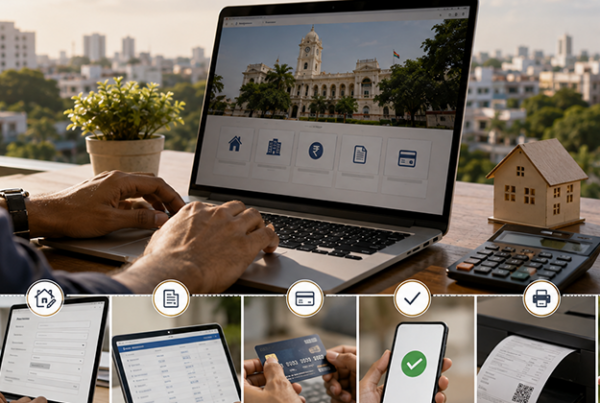
Patta Chitta Tamil Nadu: How to Apply Online, Download Patta & Check Status

Buying land involves more than checking the location, price and development potential. Buyers must also verify whether the property has proper revenue records and whether the seller’s name matches the government records. In Tamil Nadu, one of the most important land records used for this purpose is Patta Chitta.
Whether you are purchasing agricultural land, a residential plot or one of the many plots in Chennai, understanding Patta Chitta can help you identify discrepancies before completing the transaction. This Blog explains the meaning of Patta, how to apply TN online patta, check its status, download the record and understand its validity.
What Is Patta Chitta?
Patta is a revenue record issued by the Tamil Nadu Revenue Department in the name of the person recognised as the pattadar or recorded landholder. It generally contains information such as:
- Name of the pattadar.
- Patta number.
- District, taluk and village.
- Survey number and subdivision number.
- Land classification.
- Extent or area of the land.
- Tax and revenue-related details.
Chitta traditionally contained details about the nature and classification of land, including whether it was agricultural or non-agricultural. It also helped identify whether the land was classified as wetland or dryland. In current online land-record services, Patta and Chitta details are generally accessed together as a consolidated record.
In simple terms, Patta Chitta helps connect a particular land parcel with its recorded holder and revenue details. It is particularly important during land purchases, patta transfers, inheritance-related changes and property verification.
Must Read: CMDA Approval: Meaning, Importance and How to Check Status Online
Meaning of Patta in Tamil Nadu
The term Patta refers to an official revenue entry maintained by the government. Therefore, patta in Tamil Nadu is not simply a receipt or tax document. It is a record that indicates who is recorded as the pattadar for a specific survey number.
However, buyers should remember one important point: Patta alone is not conclusive proof of ownership. Courts have repeatedly held that a Patta is a revenue record and does not, by itself, create or establish title. A registered sale deed, previous title documents and a clear chain of ownership are also required to establish legal title.
For this reason, Patta should be checked along with:
- The registered sale deed.
- Parent or mother documents.
- Encumbrance Certificate.
- Approved layout or planning permission, where applicable.
- Property tax and land tax receipts.
- Field Measurement Book sketch, where relevant.
- Legal heir or partition documents in inherited properties.
Must Read: Best Place to Buy Land in Chennai: Top 10 Areas Ranked
Why Is Patta Important?
Patta is useful for confirming whether the revenue records correspond with the property being offered for sale. It may help buyers identify differences in the owner’s name, survey number, subdivision or land extent.
A buyer can use Patta Chitta to:
- Check the recorded pattadar’s name.
- Compare the survey number with the sale deed.
- Review the recorded land classification.
- Identify possible discrepancies in extent or subdivision.
- Support applications for patta transfer.
- Assist with property-related loans and legal due diligence.
- Check whether land is shown as government or private land through the official portal.
The Tamil Nadu government’s land-record portal also provides options to view and verify Patta, A-Register extracts, FMB details and government or private land status.
Must Read: Top Areas in Chennai Ranked by Property Value
How to View Patta Online in Tamil Nadu
The government provides an online land-record service through the Tamil Nadu e-Services portal. This is commonly referred to as Tamil Nadu eservices patta by property buyers searching for online land records.
To view the record:
- Visit the official Tamil Nadu land-record e-Services portal.
- Select “View Patta / Chitta / FMB” or the relevant land-record option.
- Choose the district, taluk and village.
- Select the appropriate land category, such as rural or Natham, if applicable.
- Enter the Patta number or survey number.
- Add the subdivision number, wherever applicable.
- Enter the authentication or captcha details.
- Submit the information to view the record.
This is the standard process for online patta view in Tamil Nadu. In urban areas, buyers may need to check the Town Survey Land Register, or TSLR, instead of relying only on rural Patta or Chitta records. This is especially relevant for properties located within Chennai Corporation and other urban limits.
Must Read: Vastu Tips for Flats: Does the Floor You Choose Matter
How to Apply for Patta Online in Tamil Nadu
Most online applications relate to Patta transfer or changes in the revenue record after a sale, inheritance, partition, gift or other lawful transaction. If you want to apply for patta online in Tamil Nadu, keep the relevant ownership and transaction documents ready.
A typical application process involves the following steps:
- Open the official Tamil Nadu land-record e-Services portal.
- Select the option for online Patta transfer or change of title.
- Enter the applicant’s personal details and property information.
- Provide the district, taluk, village, survey number and subdivision details.
- Select the reason for the change, such as sale, gift, inheritance or partition.
- Upload supporting documents.
- Submit the application and save the acknowledgement number.
- Use the acknowledgement number to track the application.
Documents may vary depending on the type of application. Commonly requested documents include the registered sale deed, gift deed, partition deed, legal heir certificate, death certificate, settlement deed or other relevant title documents.
The official portal states that Patta transfer applications can also be filed through Common Service Centres across Tamil Nadu. It currently lists a fee of ₹60 per application at CSCs. Applicants should confirm the applicable fee and process before submission because government procedures and service charges may change.
Must Read: Land Buying Procedure in Chennai: Full Guide & Checklist
How to Check Patta Status
After submitting an application, applicants should regularly monitor the patta status of Tamil Nadu through the official service portal or the channel used for submission.
To check patta online in Tamil Nadu, you will generally need:
- Application or acknowledgement number.
- Registered mobile number or applicant details, where required.
- Property particulars, depending on the service.
The status may show that the application has been received, is under scrutiny, requires field verification, has been approved or has been rejected. If the application is delayed, the applicant can contact the concerned Taluk office or the designated revenue authority with the acknowledgement details.
The Commissionerate of Land Administration states that Patta transfer cases without subdivision are generally intended to be disposed of within 15 days, while cases involving subdivision are generally intended to be disposed of within 30 days from receipt of the application. Actual timelines may vary if documents are incomplete, ownership is disputed or field verification is required.
Must Read: Chennai Property Tax: How to Pay Online in Minutes
How to Download Patta Online
Once the record is available online, you can complete patta download in Tamil Nadu by viewing the relevant Patta or Chitta extract and using the download or print option provided on the portal.
The general process for download patta online Tamil Nadu is:
- Enter the property details on the official portal.
- Retrieve the Patta, Chitta, FMB or TSLR extract.
- Check the owner name, survey number and land extent.
- Select the print or download option.
- Save a digital copy and retain a printed copy for reference.
The portal cautions users not to use the browser’s automatic translation feature while viewing extracts because names displayed in Unicode Tamil may be translated incorrectly. It is advisable to compare the downloaded record with the original sale deed and other documents.
Must Read: Stamp Duty & Registration Charges in Chennai: Complete Breakdown
Is Patta Valid? Does It Expire?
A Patta generally does not have a fixed expiry date. It remains a current revenue record until it is changed, transferred, cancelled or modified by the competent authority. However, it must reflect the present ownership and property details.
For example, if a property is sold but the Patta continues to show the previous owner’s name, the record is not updated. The purchaser should apply for Patta transfer after registration. Similarly, changes may be required after inheritance, partition, subdivision, court orders or correction of an error.
This means the land patta in Tamil Nadu should be treated as a living revenue record that must be updated whenever the property details change. It should not be treated as a permanent substitute for a title document.
Must Read: Real Estate Regulation Act: A Complete Guide for Homebuyers
What Is Patta Verification?
Patta verification in Tamil Nadu involves comparing the online revenue record with the property documents and physical property details. During verification, buyers should check:
- Whether the pattadar’s name matches the seller’s name.
- Whether the survey and subdivision numbers are identical.
- Whether the land extent is consistent across documents.
- Whether the land classification permits the proposed use.
- Whether the property is shown as private or government land.
- Whether there are multiple pattadars or joint owners.
- Whether the property falls within the boundaries shown in the FMB or TSLR record.
A Patta mismatch does not automatically mean that the property is fraudulent, but it should not be ignored. The buyer should ask the seller to clarify the difference and obtain an independent legal opinion before paying an advance.
Must Read: Best Time to Buy a House in India: Month-by-Month Analysis
Final Checklist for Property Buyers
Before purchasing land or residential plots, complete the following checks:
- View the latest Patta or TSLR extract online.
- Verify the seller’s identity and ownership documents.
- Obtain an Encumbrance Certificate.
- Compare the survey number, subdivision and extent.
- Check the approved layout and planning permissions.
- Confirm access roads and physical boundaries.
- Verify government or private land status.
- Apply for Patta transfer after registration.
For buyers exploring plots in Chennai, professional guidance can make the documentation process easier. StepsStone Promoters Pvt Ltd can help property buyers understand the importance of land records and evaluate documentation before making a purchase decision. However, buyers should always conduct independent legal verification for the specific property.
Patta Chitta is an important part of Tamil Nadu’s land-record system, but it is only one element of complete property due diligence. A safe purchase requires the Patta, registered title documents, planning approvals, encumbrance checks and physical verification to tell the same story.